I promise

"I promise, Suzy... Even if it takes the rest of my life." -Nancy G. Brinker, Founder of Susan G. Komen for the Cure

What is TNBC

WHAT IS TRIPLE NEGATIVE BREAST CANCER?

Just in recent years, Triple Negative Breast Cancer (TNBC) has sparked interest in the news where instead of calling the tumor as ER-negative, PR-negative, and HER2-negative; researchers began using the shorthand term, "Triple Negative," dubbed the "new type" of breast cancer. Being Triple Negative, you don't have a targeted therapy and your only treatment option is chemotherapy.

Triple Negative Breast Cancer is seen in about 15% of all breast cancers. TNBC is a very aggressive cancer that tends to strike younger women, pre-menopause, especially among African-American women and women who have BRCA1 mutations. The tumor tends to be fast growing and is less likely to show up on an annual mammogram. TNBC is more likely to metastasis early on; has a high rate of recurrence in the first 2-3 years from diagnosis and has a poorer prognosis than other types of breast cancer due to lack of specific, targeted treatment for TNBC.

Friday, April 29, 2011

Dr. Lisa Carey, World-Wide Expert In Triple Negative Breast Cancer


Lisa A. Carey, M.D.
Associate Professor
Breast Cancer
Hematology/Oncology

Clinical Interests
Dr. Carey is board-certified in both Internal Medicine and Medical Oncology. Her clinical interest is in breast cancer, and she is the Medical Director of the UNC Breast Center.
Research Interests
Dr. Carey's research interests also focus upon breast cancer, including examination of different subtypes of breast cancer, evaluation of new chemotherapy agents in early breast cancer, and examination of tumor characteristics that predict response to therapy.

Dr. Carey has worked extensively with scientists across Lineberger Comprehensive Cancer Center and the UNC Gillings Global School of Public Health to better understand and characterize the molecular subtypes of breast cancer so that we may develop better prevention and treatment strategies. With Drs. Perou and Millikan, she identified the elevated risk of the poor-prognosis basal-like breast cancer subtype in young African-American women. She is a world-wide expert in triple negative breast cancer, and led the first trial looking at a new drug regimen in this breast cancer subtype. She is now the leader of a group of UNC clinician researchers using a variety of new drugs in different molecular subtypes of breast cancer based upon biologic information learned from scientists at Lineberger.

For example, the members of the UNC Breast Center have a long commitment to improving treatment of early (nonmetastatic) breast cancer, and have been early investigators in the use of neoadjuvant, or preoperative, chemotherapy for breast cancer. In part based upon work performed at UNC, we now know that women do just as well if their chemotherapy is given before surgery as after, however the chemotherapy-first approach means that they are more likely to save their breast. In addition, with preoperative therapy it is possible to tell if the drugs are working since the tumor is still measurable when the chemotherapy is given first. Part of Dr. Carey's clinical research program investigates new drugs and combination of drugs in preoperative therapy. As part of this neoadjuvant chemotherapy program, she is involved in several studies, including a multiinstitutional trial sponsored by the National Cancer Institute, of genetic and molecular markers in breast cancer as predictors of response to chemotherapy, and she is the lead investigator of a national study of new drug combinations in HER2-positive breast cancer.

Dr. Carey is also the principal investigator of a highly collaborative study examining genes that might interact with other genes or with the environment to impact on a woman's risk of developing breast cancer.
Recent Accomplishments and Honors

For her work, she was awarded a Doris Duke Clinical Scientist Award in 1999, a career development award from the National Cancer Institute in 2000, was inducted into the Johns Hopkins Society of Scholars in 2008, and was honored to serve as UNC?s commencement speaker in December, 2009.

Training
M.D., Johns Hopkins School of Medicine 1990
Resident, Internal Medicine, Johns Hopkins 1990-3
Fellow, Medical Oncology, Johns Hopkins 1993-8
Sc.M., Clinical Investigations, Johns Hopkins School of Public Health 1994-8

Bio:
Lisa Carey is an Associate Professor in the UNC Department of Medicine, Division of Hematology-Oncology. She graduated from Wellesley College in 1984 with a BA in Biology and Art History, before receiving a MS in Physiology from the University of Kentucky. She received an MD from the Johns Hopkins University School of Medicine in 1990. After a residency in Internal Medicine also at Johns Hopkins, she stayed at Johns Hopkins for a fellowship in Medical Oncology. During her fellowship she completed a ScM. in Clinical Research. Dr. Carey joined the UNC faculty in 1998. She has served since 2003 as the Medical Director of the UNC Breast Center and is the UNC-Lineberger Comprehensive Cancer Center (UNC-LCCC) Protocol Office Executive Committee Breast Disease Group Leader as well as the UNC-LCCC Protocol Review Committee Breast Cancer Chair.

Dr. Carey has a well-defined interest in clinical/translational research in breast cancer, with a particular interest in the clinical implications of different molecular subtypes of breast cancer. She both designs and leads clinical trials as well as working often and well with laboratory investigators. She has successfully translated bench efforts from laboratory science collaborators into clinical research. She was the lead author of a recently published article in JAMA examining racial disparities among breast cancer subtypes. She is the principal investigator (P.I.) of several clinical trials, including a multicenter inter-SPORE (Specialized Program of Research Excellence, National Cancer Institute [NCI]) Phase II study of targeted therapy in metastatic basal-like breast cancer (a subtype identified by gene expression array). This heavily funded trial includes both clinical and laboratory participation from UCSF, Dana Farber, Duke University, Georgetown, Johns Hopkins, Baylor, Washington University, University of Alabama-Birmingham, Mayo, and M.D. Anderson Cancer Center, and is a testament to her ability to provide clinical leadership in translational and early clinical research.
Dr. Carey is the P.I. of a recently published multicenter Phase II study incorporating biologic therapy into chemotherapy for locally advanced breast cancer as well as a proposed cooperative group neoadjuvant trial examining several HER2-targeted strategies for Stage II-III HER2-positive breast cancer. She is the clinical liaison for several correlative science collaborations, including both institutional and cooperative group trials that correlate nucleic acid and protein characterization of breast cancers with response to neoadjuvant therapy.
Dr. Carey has served on the American Society of Clinical Oncology (ASCO) Scientific Program Committee and as faculty for the ASCO annual meeting for several years. She was named to the Cancer and Leukemia Group B (CALGB) Breast Core Committee in 2003. She was awarded a Doris Duke Clinician Scientist Award in 1999 and a Career Development Award from the NCI in 2000. 


Telephone: (919) 966-4431
FAX: (919) 966-6735
Address: 3009 Old Clinic Bldg. Chapel Hill, NC 27599-7305 


Biologic Differences in Breast Cancer: An Expert Interview With Dr. Lisa Carey http://www.medscape.org/viewarticle/572082


Next Generation Treatment for Triple-Negative and Basal-Cell Breast Cancer http://www.cancernetwork.com/conference-reports/mbcc2011/content/article/10165/1817148


List of Triple-Negative Sensitive Genotoxic Agents
Cyclophosphamide (Cytoxan)
Carboplatin (Paraplatin)
Cisplatin (Platinol)
Doxorubicin (Adriamycin)
Epirubicin (Ellence)
Mitomycin C (MTC / Mitomycin / Mutamycin)
Radiation (Radiotherapy
PARP Inhibitors

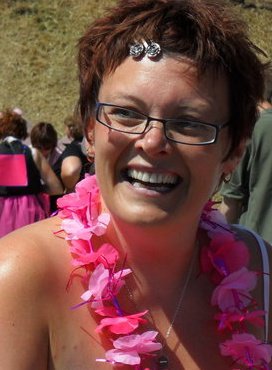


In Memory Of Joanne Wattam...


One of my TNBC Support group pink sisters has gotten her wings on April 29, 2011... may you be at peace now, Joanne.


Quoted from a post ion January 18, 2011 in our support group 
"I can remember my onco saying to me last year after my op... if you go 2 yrs without a recurrence then you are doing well... how are you supposed to put that to the back of your mind... he was right... 7 months later i was re-diagnosed.. so am back on chemo again.. but you pick yourself up, dust yourself down and carry on for the sake of your kids, hubby, family and friends..."  - Joanne Wattam


Joanne was diagnosed at age 39 with TNBC, Stage 2, 7 mos out of chemo with a recurrence, found lump in neck.  Joanne just turned 40 and she did develop infections that the doctors couldn't get under control... pneumonia in her lungs for one. Fluid gathered in lungs. 

Sunday, April 24, 2011

Lisa Spitler - GBMC Breast Cancer Patient


Lisa Knauer Spitler, a friend that I connected with online in a Triple Negative Breast Cancer Support Group, She is a 1 year TNBC survivor. Lisa and her family tells her story of survival and her care at GBMC. Lisa gives back by making a blanket to be given to other breast cancer patients when she comes back to visit. Lisa also donated a bell that will be place outside of Radiation Oncology for patient to ring on their last day of their radiation treatment.


Monday, April 18, 2011

I AM A SURVIVOR...


♥ SURVIVOR ♥

I have
lived,
laughed,
loved
and lost.
I have
cried,
mourned
and
grieved,
hoped,
prayed
and
healed.
I have
found
strength
and true
beauty.
I am a
SURVIVOR.. ♥

Friday, April 8, 2011

Triple Negative Breast Cancer, The Ugly Truth

I have been advocating the importance of self breast exams especially among younger women since most triple-negative tumors are not detected by mammograms due to the breast tissue density in women. Also, triple-negative tumors may be growing rapidly between image screenings. Many women that have asked me about my cancer, I have told them that if you suspect a lump, don't delay, you need to see your doctor and get a mammogram; early detection is the key to having a better outcome with a triple-negative diagnosis.


Tho, we do not know what fuels Triple Negative Breast Cancer, I have been told that changing my life style; low-fat diet, regular exercise, less stress and being physically fit significantly reduces your chance of TNBC recurrence.

We need to bring awareness to this sub-type,Triple Negative Breast Cancer and BRCA testing; helping younger women realize the importance of self breast exams and that early detection will save more lives from this dreaded disease. Women need to be educated and many are not; on the importance of BRCA genetic counseling which is highly recommended at time of TNBC diagnosis to determine the best course of treatment. Patients having both TNBC and being BRCA1 positive; doctors often recommend the option of bilateral mastectomy and removal of ovaries and fallopian tubes as part of their treatment to greatly reduce the risk of further breast cancer and ovariarian cancer in which BRCA is associated with.

Just a few years ago, no one even heard of TNBC, a type of breast cancer that researchers knew a little about. Triple-Negative is one of the most aggressive tumors ever seen by doctors. The first reference of "Triple Negative" Breast Cancer in medical literature was in October 2005. Focused studies for TNBC had only been conducted in the last few years. Triple Negative Breast Cancer had recently become a hot area of research for targeted therapy and the latest in clinical trials in the study of breast cancer at all of the big research institutions including top-rated cancer center in the country, MD Anderson, which is the first institution to look exclusively at women with Triple Negative Breast Cancer.

Triple Negative tumors lacks expression of estrogen receptor (ER) and progesterone receptor (PR), along with the absence of human epidermal growth factor receptor-2 overexpression (HER2) portraying a critical clinical challenge because this type of cancer doesn't respond to hormone therapy or other available targeted agents; Standard Chemotherapy remains the only treatment available and only effective in about 40% of patients; and in those that do relapse, the cancer becomes highly resistant and quickly results in death.

Triple Negative Breast Cancer accounts for about 15% of all breast cancers and is responsible for about 25% of all breast cancer deaths. Triple-Negative is characterized as a rapid growing breast cancer with a relatively poorer outcome; usually diagnosed at a late stage, shorter survival rate, more likely to metastasize and has a high risk of early recurrence between 2-3 years after diagnosis. One study on distant recurrence concluded that 56 out of 61 TNBC patients that had relapsed had died, and the average time from recurrence to death is about 9 months.

Pre-menopause women in their 20's or 30's are more susceptible to Triple Negative Breast Cancer and, African-American women are at highest risk. The 5 year survival rate among African-American women with TNBC is about 14% and is the #1 cause in breast cancer deaths in African-American women . "Dr. Nanda said it’s not entirely understood why African American women are more susceptible to triple negative breast cancer. It could be genetic or environmental causes. The causes of the disease are just as mysterious for young women."

Many women who are diagnosed with Triple Negative Breast Cancer are often left in the dark about what triple-negative means for them at time of diagnosis. Often, these women turn to the internet searching for answers and are terrified with learning the aggressiveness of triple-negative and poorer prognosis due to no effective targeted therapy for this type of breast cancer. Also, TNBC " shows substantial overlap with basal-type and BRCA-1 related breast cancers, both of which also have aggressive clinical courses." Inherited BRCA -1 gene mutation carriers has an upward 80% life time risk of developing breast cancer and about 50% risk of developing ovarian cancer. 90% of BRCA-1 carriers are also Triple Negative but 20% of TNBC has BRCA mutations.

The clinical drug, PARP inhibitors that prevents cancer cells from repairing it's own DNA; are showing promising results in improving prognosis for Triple Negative Breast Cancer and BRCA Positive patients. "Important limitations still need to be overcome in the next few years if any significant clinical strides are to be made."

A research study conducted at The City of Hope's Division of Tumor Cell Biology of the natural fruit, blueberries gave preliminary promising results of controlling tumor growth, reduction of metastasis, and causing cell death in triple-negative breast cancer cells, at more than double the rate observed in untreated cells.

In 2009, Susan G. Komen for the Cure and Triple Negative Foundation teamed up to fund a $7.5million Promise Grant over 5 years to researchers looking at an antibody in hope of developing a targeted long-term therapy for triple negative tumors.

News correspondent, Jennifer Griffin and news anchor, Robin Roberts are TNBC survivors. I've link you to their stories.


Tuesday, March 29, 2011

Triple Negative Breast Cancer Is Rare But Aggressive - WTOL.com - Toledo's News Leader |


Triple negative breast cancer is rare but aggressive - WTOL.com - Toledo's News Leader | (click to view video)


By Jonathan Walsh -
TOLEDO, OH (WTOL) - It's aggressive. It's rare. And sometimes, it doesn't show up on a mammogram.
A special information session was held Monday night on triple negative breast cancer. This variation only affects about 15 percent of breast cancer patients, but it attacks quickly.
Survivors asked questions about the disease to help understand more about what to expect. They also asked whether their daughters should have genetic testing.
Melissa Paskvan is a triple negative patient who attended. "I knew I had aggressive cancer," she said. "I knew it was rare, and I knew there was no treatment for it besides chemo."


Thursday, March 24, 2011

Today, I Lost A Very Close Friend To Triple Negative Breast Cancer...

Melissa and Robin at her benefit dinner, November 2010

Today, March 24, 2011, I lost one of my closest friends, Robin Kraemer, age 56 to Triple Negative Breast Cancer. I am so sad right now... Robin was my neighbor directly across the street from me for the past 17 years, we spoke almost daily. She gave this such a good, long 2½ year fight, and I admired her strength. I spent Monday and Tuesday with her and shared some laughs. Today she was non-responsive but could hear us talking as I sat at her side. This is so heartbreaking for many of us who loved her so much. Robin, I love you so much, and thank you for telling me to get a mammogram when I found my lump and showed it to you and you felt it. You're finally at peace, and I know you will be watching over me like you always did.


Melissa Robin at her Ohio State Party, November 2008

God saw you getting tired
and a cure was not to be
so he put his arms around you
and whispered,
"Come to me"


With tearful eyes we watched you
and saw you pass away
and although we love you dearly
we could not make you stay


A Golden heart stopped beating
hard working hands at rest
God broke our hearts to prove to us
He only takes the best


- Author unknown


Robin, I remember like 5  years ago when we joked about me making funeral CD's, yours being the first to be made including Led Zeppelin's "Stairway to Heaven" and you wanted it to be played at your funeral.  Last night at the funeral home towards the end of your evening, when things were quieting down, all of a sudden "Stairway to Heaven" blasted out, I mean you rocked it out, our sadness bursted into laughter as we knew this what you said you always wanted... turn it up, please! Then this morning as we gathered one last time in the parlor room as "Stairway to Heaven" was softly being played before prayers, I never thought I could cry through a Led Zeppelin song, I'm sure you were pleased. As I'm winding down the night, I spin this song one last time for the evening, Enjoy the ride.
"Dear lady, can't you hear the wind blow, and did you know
Your stairway lies on the whispering wind..."


Tuesday, March 15, 2011

Making Strides Against Breast Cancer Kickoff March 5, 2011

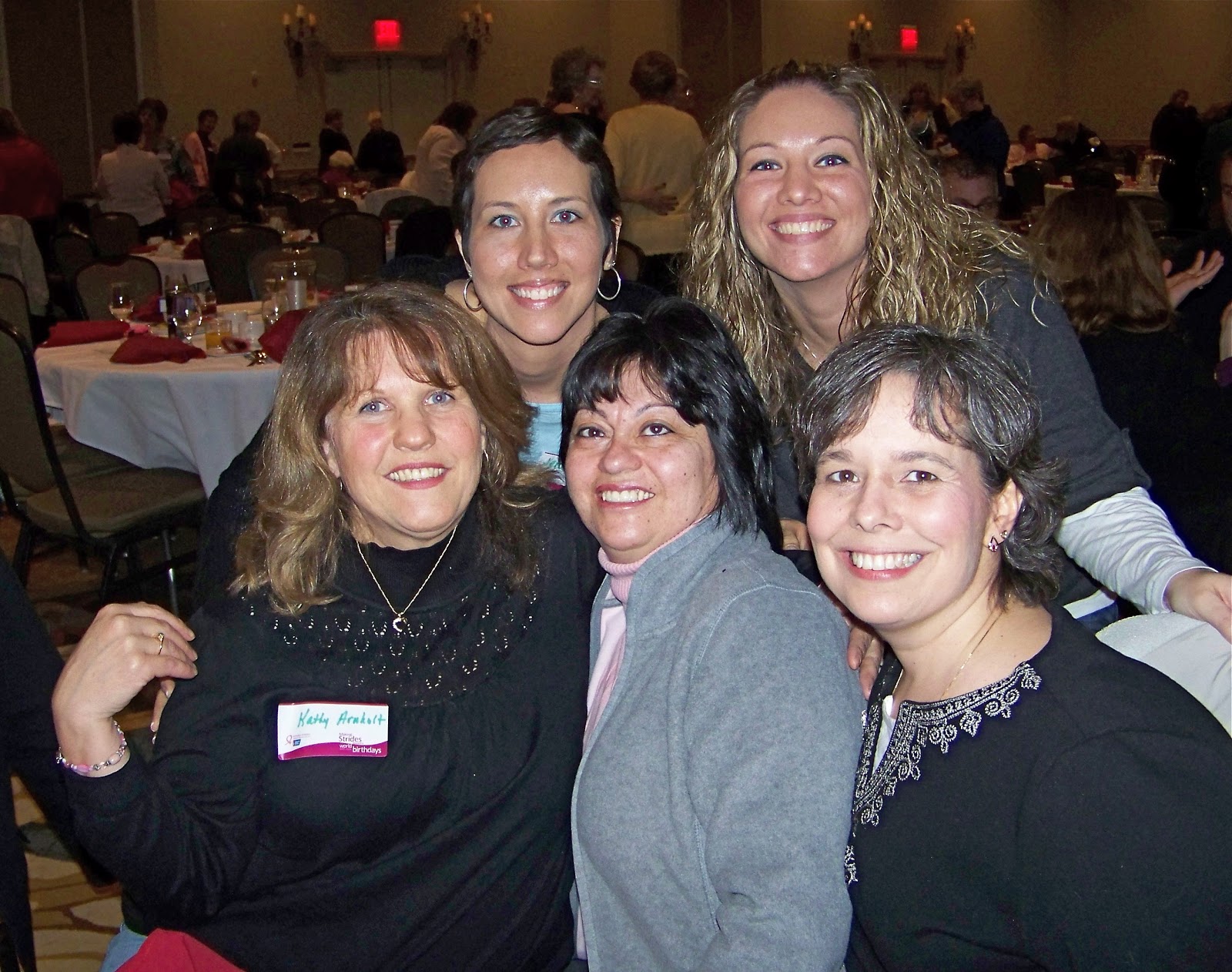
Me with my "special mom", Kathy Arnholt


 My Triple Negative Sisters: Jen Cannon, 
Genny Diaz Williams & me

Me & my TNBC sister, Genny

Kathy & Melissa

front: Kathy, Genny, Melissa
back: Jen & Nikki

Me: "Cupcakes!"


“We tend to forget that happiness doesn't come as a result of getting something we don't have, but rather of recognizing and appreciating what we do have.” ~Frederick Keonig


Toledo Walleye Hockey "Pink In The Rink" 2011


Me and TNBC survivor and good friend, Genny Diaz Williams whom I met at radiation went to "Pink at the Rink" on March 4, 2011 to support breast cancer awareness where tens of thousands of dollars was raised for Susan G. Komen for the Cure for research. 

Life Beyond Breast Cancer

I am now a 18 month survivor and celebrated another birthday this past August, Woo Hoo! Being 1 year out post treatment, I feel great for the most part... I still have a lot of fatigue tho. Is there such thing as chemo brain? Absolutely!... Seriously, I feel like my brain is fried... I have become very forgetful and it does annoy me at times and can be frustrating ... best thing for me to do is to write everything down. On one of several occasions, I've had trouble with words, for instance, recently was trying to type a message and I couldn't figure out how to spell the word "sad", it just wouldn't come to me... then I went to my dictionary to look the word up but then I couldn't sound it out... I was flustered, It's a 3 letter word S-A-D, I knew how to spell it, I'm not stupid, it's just my brain wouldn't function like it use to. 
After 9 months without a "cycle" due to chemo treatments, my menopause was just temporarily with period returning but irregular, Doc thinking I'll hit menopause again within 2 years My husband saw it as a sign that I'm getting better. Sucks to know that I have to go through menopause twice now. I still often rub my port scar missing my port being there... weird, I know. My hair came in gray and got darker and wavier as it's getting longer, about 5-6in. long now but seems like it's taking forever to grow out. I had my mammogram along with a MRI in September, CLEAR SCANS, still in remission... What a relief, I am now starting to feel confident about my health again. At my last breast exam, there was I think 3 interns; 1 male and 2 females, a nurse, my research coordinator and my oncologist when she asked me if I mind undressing so she can do a breast exam? Actually, I did mind with that many people in the room all looking at me. My oncologist then asked me if I want some of them to leave the room and I said, "Yes, all the woman can leave" leaving just the one one male intern, she laughed and sent all the woman out of the room. I then had my oncologist and the male intern turn around while I unbuttoned my shirt because I didn't want them to see the old raggedly bra I had on. 
My oncologist told the male intern that he has to ask me for my permission to do a breast exam on me so he asked me, "Melissa, May I"... I didn't even let him finish and I said, "Yes, you may!" My oncologist laughed and said she was going to email and tell my husband afterwards, LOL!
This past fall, my research coordinator had me on a study for ginseng for energy to help with my fatigue. After the first 8 weeks, I found out that I was only taking a placebo. Then 4 weeks of the "real" ginseng, it didn't help me at all with my fatigue... bummer. 
Let me tell you a little about BRCA that I'm still learning about. BCRA is a gene mutation that is passed down in family and is linked to a great risk of breast cancer and ovarian cancer. From what I heard is that most BRCA Positive cancer is also Triple Negative cancer and has a 80% chance of recurrence. Me being Triple Negative, that would make me a good candidate of being a BRCA carrier but I chose not to get tested because I don't want to know. My surgeon told me that it's not whether I get tested or not, it's what I decide to do with that information if I was to test positive for BRCA. Being BRCA positive, the recommendation would be to have a bilaterial mastectomy and have ovaries and tubal removal because the risks are so high. I don't think I could go through all that when everything is healthy right now if I was to test positive... It's too much for me to handle right night, kinda like starting all over again without the treatments. Doc told me to concentrate on the 20% of non-recurrence and reduce my risks with staying fit, low-fat diet changes, exercise, keeping up with my scans and now add ultrasound on my ovaries annually to the my list. The whole thing is pretty scary, I figured I deal with it when and if the time comes. 
I have participated in some of The Victory Center's programs and activities: massages and facials were my favorite; reflexology was good on my feet; Healing Touch and Reiki, I couldn't get into.... I guess it's not for me. What I enjoy most about the Victory Center is the Breast Cancer Support Group where you can go and talk to other women who have walked in my shoe's that don't mind talking about breast cancer and sharing each other's experiences. 
I walked the Komen Race for the Cure with some lady friends from high school... Wow, there was a lot of pink, a lot of survivors participating in the walk... you see the reality of how many women have been affected by breast cancer in NorthWest, Ohio. I participated in the University of Toledo's Relay for Life in December with my son. I've gone to various Susan G. Komen and The Victory Center events including University of Toledo girls basketball's "Rocket for the Cure", Toledo Mud Hens hockey "Pink in the Rink", various guest speaker events and The Victory Center's Luncheon and Fashion show featuring cancer survivors as models. 
After treatments, with no job to return to, I spent a good part of my summer visiting a good friend at the lake... trying to figure out my new "normal" and adjust to living again. Having Cancer has made me a much stronger woman, I know now that I can withstand anything. I have to admit that life after cancer treatments is a lot harder than when i was going through it. People seem to think that when you're done with treatments and is cancer free that it's done and over, put it behind you, things can go back to normal... Only if it was that easy. I've been struggling some... the life I once had, there's no going back to... so many changes that I'm learning to cope with still. I've got tears in my eyes as I'm writing this, because people just don't "get it" and I don't like to complain. I miss my jobs I once had, I really loved the work I did and it's all gone, my work defined me. I'm tired all the time and am not spending real quality time with my son and husband and we all have noticed it. I feel so scattered brain at times to the point I don't like to take on anything challenging and has been difficult for me to take care of my house like I should. I've been stressing with my follow-up appointments with how I'm gonna pay for the visits since my health insurance changed drastically. Diet and lifestyle changes have gotten easier but I still have a long way to go to reduce my chance of recurrence... It took me a year to get this through my head but I have to do it, I really do and it takes a lot of self discipline to stay on track. Along with my hair loss, the change in my breast appearance, limited use of my arm for risk of lymphedema, lasting aches and pains and the fear of relapse... This has all taken a toll on me. My "Triple Pink " sisters "get it"... they're all going through the exact same thing and just want to feel and look normal again, it hasn't been easy. I have reached out to many TNBC survivors who had walked my same path, it's very self-rewarding knowing that you have made a difference in that person's outlook as I do have a positive attitude... Don't get me wrong, I do have a lot of good days too where I get out and do fun stuff... I like living for the moment, enjoy who and what's around me... LOL, I do post a lot of pictures of good times, don't I? 

Thursday, March 10, 2011

Victory Center's Luncheon And Fashion Show Benefit 2011


On February 18, 2011, 360 guests came out to support The Victory Center's 4th annual Luncheon and Fashion Show featuring courageous cancer survivors as models.
Pictured with me is my friend/former co-worker Julie Overy on my left and my mother-in-law, Barb Purney on my right. Another very nice event for a very good cause, The Victory Center has been another home for me to meet up with other breast cancer survivors for good conversations.

Saturday, February 26, 2011

Chemo Cocktail...

Melissa Stukenborg Paskvan ‎...instead, I got the red devil cocktail...
pftt, the hangover the next morning, feels like I had enough tequila to
 knock me on my ass for the next 12 days!
Karen Miller Herbert No other cocktail will do that to you Melissa
 ...must be good stuff...NOT !!!

Friday, February 4, 2011

Blame It On Chemo!

Thinking and Memory problems... Who, me? Us cancer survivors has this side effect after going through cancer treatments, it's called Chemo Brain and at times can be very frustrating...
http://www.mayoclinic.com/health/chemo-brain/DS01109
 (Click link for full story)


Rita
A quote from my indonesian girl Rita, "SoRry for kept this pics so long guys and forgot to say "Thank U" for the book... Its my chemo brain did this not me!! :D :D. GBU.."

Total Pageviews


"click image to link"